
Corporate earnings got a big boost from the fall in commodity and energy prices in July-September 2023 (Q2FY24) despite a slowdown in revenue growth during the quarter. The combined net profits of 3,123 firms that have declared their results so far were up 38 per cent year-on-year (Y-o-Y) to Rs 3.07 trillion in Q2FY24, up from Rs 2.24 trillion a year ago. Earnings were, however, down 3.5 per cent on a sequential basis from Rs 3.18 trillion in April-June (Q1) FY24.

Sliding for the fifth straight session, the rupee fell 3 paise to close at a fresh lifetime low of 79.06 against the US dollar on Thursday amid a strong greenback overseas and unrelenting foreign fund outflows. At the interbank forex market, the local unit opened at 78.92 against the greenback and witnessed an intra-day high of 78.90 and a low of 79.07. It finally settled at 79.06, down 3 paise over its previous close of 79.03.

Food delivery platform Zomato has laid the foundation for its third vertical of growth by agreeing to acquire Paytm's entertainment and ticketing business, said analysts on Thursday (August 22). Zomato, which also runs a quick commerce business called Blinkit, will strengthen its 'going out' offering but the acquisition may take time to yield results, they said. "Paytm's entertainment and ticketing arm will be part of Zomato's District app, which is due to be launched in the coming weeks.

After National Spot Exchange Ltd (NSEL) this week suspended trading in forward contracts, the Forward Markets Commission (FMC), the commodities market regulator, on Friday sought to allay fears over the exchange defaulting on open contracts.

Equity indices chalked up losses for the second straight session on Monday, in tandem with a bearish trend overseas as ratcheting up of hostilities in Ukraine and prospects of further rate hikes by the US Fed soured global risk sentiment. The rupee slipping to another all-time low against the US dollar amid foreign fund outflows added to the gloom, traders said. After tumbling over 800 points in intra-day trade, the 30-share BSE Sensex clawed back some lost ground to end 200.18 points or 0.34 per cent lower at 57,991.11.

India's financial sector is dominated by large government-owned and private-sector banks.

Indian equity markets are likely to witness volatility this week due to concerns over rising cases of coronavirus and expiry of derivatives contracts, analysts said. Further, progress surrounding the COVID-19 vaccine, related updates, US stimulus talks and global cues would dictate the market trend, traders said. "Going ahead, the market is likely to be volatile as sentiments oscillate between fear of rising COVID cases globally and optimism over vaccine progress. Investors would closely watch out development over the US stimulus talks," said Siddhartha Khemka, Head - Retail Research, Motilal Oswal Financial Services Ltd.

The earnings are, however, expected to be down around 2 per cent on a sequential basis due to pent-up demand getting exhausted and the adverse impact of rising metals and energy prices on consumer goods and manufacturing companies.
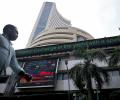
RBI policy, macro data, company earnings to decide market course this week: Experts

Shares of MRF crossed a first time Rs 100,000 mark, hitting a record high of Rs 100,300, up 1.4 per cent on the BSE in intra-day trade. on June 13, 2023. The stock surpassed its previous high of Rs 99,879.65, touched May 8, 2023. Thus far in the current calendar year 2023 (CY23), MRF has outperformed the market by gaining 14 per cent on improved financial performance.

Omkeshwar Singh, Head, Rank MF, a mutual fund investment platform, answers your queries.

India Inc reported an uptick in revenue growth in the January-March quarter (Q4) of 2023-24 (FY24), but it came at the cost of a deceleration in earnings growth.

When shares of Nykaa's parent FSN E-Commerce Ventures skyrocketed in debut trade on Wednesday, founder Falguni Nayar and family also saw their wealth surge to nearly $7 billion. And when the markets closed for trade, the wealth was well over $7.5 billion. The dream debut of Nykaa, in a market being flooded with initial share sales, sustained the momentum till the close of the trade as the scrip registered a staggering gain of over 96 per cent to end at Rs 2,206.70 apiece on the BSE.

The interim Budget proposals that will be presented on February 1 in the backdrop of the general elections scheduled in April/May 2024 are likely to have a hint of populism, believe analysts, but are unlikely to derail the government from its path of fiscal prudence.

Despite gold prices hitting record highs, analysts aren't gung-ho about the outlook for gold financiers Muthoot Finance and Manappuram Finance. This, they said, was due to intense competition from banks, coupled with stagnating loan books and likely pressure on margins.

Gland Pharma, promoted by China's Fosun, has extended its gains, is up 40 per cent since its listing.

Bajaj Finance's quarterly business update, coupled with around 24 per cent fall over the past six months, has turned risk-reward favourable for investors, observe analysts. They see up to 39 per cent upside in the stock, from a one-year perspective. Global brokerage CLSA, for instance, has upgraded the stock from 'underperform' to 'outperform' with an increased one-year target price of Rs 6,600 (vs Rs 6,000 earlier) as it believes the risk-reward has turned favourable for the counter, and there is scope for expansion if growth remains robust.

Fund managers are withdrawing after a two-year long run in public sector bank (PSB) stocks. Domestic mutual funds (MFs) were net sellers of PSB stocks for the first time in nine quarters, offloading shares worth Rs 1,800 crore in the March quarter, said a report by ICICI Securities. In the previous eight quarters, fund houses had invested more than Rs 10,000 in PSBs amid deep discounts in valuation vis--vis their private sector peers.

The adverse impact on the margins of auto, consumer staples and consumer durables sectors will be counterbalanced by an earnings uptick in the metals, cement and oil & gas sectors.

Samvat 2070 was a great year for top Indian conglomerates in the stock markets.
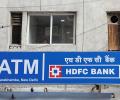
HDFC Bank's market capitalisation (market cap) touched Rs 13 trillion in Thursday's (December 28, 2023) intra-day trades as the largest private sector lender is set to report its sharpest monthly rally in the past two years. At 10:33 AM; HDFC Bank's market cap stood at Rs 13.03 trillion, the BSE data shows. The stock was up 1 per cent at Rs 1,717.90 in intra-day trades on December 29, inching towards its record high of Rs 1,757.80 touched on July 3, 2023.

Shrinking inflows and surging outflows on account of profit-booking has curtailed mutual fund (MF) investments in equities since April. The total investments made by equity MFs during the first three months of 2023-24 stands at just Rs 2,980 crore, compared with an average monthly investment of Rs 14,500 crore in 2022-23, reveals data from the Securities and Exchange Board of India. "We are seeing signs of moderation in non-systematic investment plan (SIP) contribution, which has impacted domestic fund inflows in recent months to some extent," says Kunal Vora, head-India equity research, BNP Paribas.
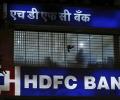
Weakness in HDFC Bank's net interest margin (NIM) might have bottomed out in the July-September quarter (Q2-FY24), analysts said on Tuesday, as most of the merger-related one-time adjustments have been done. The bank, they believe, should be able to grow from here on, allowing the stock to reverse its underperformance. "The weak NIM print was not unexpected given the merger and regulatory impact caused by the incremental cash reserve ratio (ICRR; 5-10 bps for the quarter).

The recent sell-off in IT stocks such as Infosys and Tata Consultancy Services (TCS) has resulted in a sharp decline in the IT sector weighting in the Nifty50 index. The sector's weighting in the index has slipped to a five-year low of 12.2 per cent, down from the 17.7 per cent at the end of March 2022. The top IT companies - TCS, Infosys, Wipro, HCL Technologies, and Tech Mahindra - accounted for 13.6 per cent of the index at the end of March this year.

The top-100 wealth creators generated Rs 49 lakh crore during 2014-19, the highest-ever quantum of wealth added, according to Motilal Oswal's Annual Wealth Creation Study 2019. According to the study, Reliance Industries, Indiabulls Ventures and IndusInd Bank are the biggest, fastest and most-consistent wealth creators, respectively. The number of PSUs in the top-100 wealth creators is only nine, namely IOC, BPCL, HPCL, Power Grid Corporation, Petronet LNG, Indraprastha Gas, LIC Housing, Bharat Electronics and NBCC.
Shares of Zomato on Friday zoomed nearly 53 per cent in its debut trade against its issue price of Rs 76. The stock made its debut at Rs 115, reflecting a huge gain of 51.31 per cent against the issue price on the BSE. It then hit a high of Rs 138, a jump of 81.57 per cent.

On the lines of Shariah-compliant products, intermediaries ask exchanges to consider investment benchmark.

'Higher interest rates make gold less attractive as it doesn't generate yield.' 'However, with rates set to fall, the tables are turning for gold.'

Benchmark indices gain 30% this year, buoyed by global liquidity, new government

Equity markets will look for directions from global trends, ongoing quarterly earnings and investment patterns of foreign institutional investors (FIIs) in a holiday-shortened week ahead and may encounter volatility amid the scheduled monthly derivatives expiry, according to analysts. Equity markets will remain closed on Wednesday on account of 'Republic Day'. "This week is a holiday-shortened one and it's going to be critical due to the list of events and data that are lined up.

However, despite Covid, Indian markets registered their best financial year performance in a decade, with the Sensex and Nifty50 rallying 68 per cent and 71 per cent, respectively, in FY21.

Friday will be a landmark day for domestic markets, with all the listed stocks entering the professed T+1 (trading plus one day) settlement cycle. About 200 stocks, which account for more than 80 per cent of India's market capitalisation, will be settled on a next-day basis, with effect from January 27. This will evidently complete the transition to the T+1 cycle that started in February 2022 with the bottom 500 stocks in terms of market value.

Most investors should have a 5% to 10% allocation to gold for diversification. They should stagger their investments to mitigate timing risk.

Shares of Tata Consultancy Services (TCS) declined after the information technology (IT) major reported a 1.3 per cent sequential drop in net profit for the March quarter, prompting several brokerages to cut their target prices. The TCS stock fell as much as 1.26 per cent during the day to Rs 3,205 per share.

IndiGo share price today: IndiGo share price fell as much as 4.8 per cent to a low of Rs 4,275 per share on the BSE in Monday's intraday trade as investors booked profit in the stock post a its April-June quarter (Q1) results for financial year 2024-25 (FY25). The stock ended 1.36 per cent lower at Rs 4,430 as against a 23-points gain in the benchmark BSE Sensex. The selling also got exacerbated as the management commentary, post Q1FY25 results, highlighted that inflationary pressure could likely dent July-September (Q2FY25) performance.

Omkeshwar Singh, Head, Rank MF, a mutual fund investment platform, will answer your queries.

Bharat Forge, the Pune-based automotive component maker, has been one of the top-performing companies in its segment. The company's stock price is up 39.3 per cent since the beginning of the 2023 calendar year, surpassing other leading automotive component makers such as Bosch and Samvardhana Motherson International. The stock also outperformed the benchmark BSE Sensex, which is up 17.3 per cent year to date so far.

Price correction over post-election peaks could throw disinvestment calculations awry.

For over a decade, HDFC Bank consistently outperformed industry growth rates in both deposits and advances, maintaining impeccable asset quality. Amid a landscape where other banks struggled with soaring non-performing assets (NPAs), HDFC Bank thrived, eventually surpassing ICICI Bank to become the largest private sector lender in India. Its net interest margin (NIM) remained stable in the range of 4.1-4.4 per cent.

Shares of Reliance Industries (RIL) traded 2 per cent higher at Rs 2,310.10 on the BSE in intra-day trade in an otherwise volatile market after the company reported a 27.4 per cent year-on-year (YoY) growth in its consolidated net profit at Rs 17,394 crore for the September quarter (Q2FY24). While revenue growth of the company was flattish YoY at Rs 2.32 trillion, the profit rose on the back of operational improvement across most segments, especially higher profits in the O2C (oil-to-chemicals) and oil & gas businesses, as well as the retail business. "Strong operational and financial contribution from all business segments has helped Reliance deliver another quarter of robust growth," said Mukesh Ambani, chairman and managing director of the company.
